
As we look ahead to 2026, interior design continues to shift toward spaces that prioritize people, experience, and purpose. At NES Group, staying ahead of emerging design trends allows us to guide our clients with insight, intention, and confidence—so every branch is designed for what’s next. From nature-inspired environments to smarter, more flexible branches, these trends reflect how financial institutions can better serve their communities while creating spaces that truly resonate.
Biophilic Design
Bringing the outside in
Biophilic design strengthens the connection between people and nature—something we’re all wired to crave. By incorporating natural elements, branches feel healthier, calmer, and more inviting. Think greenery and plants, natural light, water features, wood and stone finishes, and organic patterns that subtly echo the outdoors. The result? Spaces that support well-being, focus, and productivity.
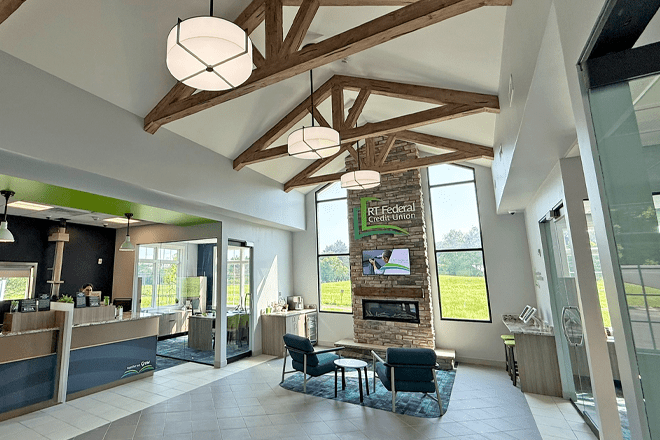
At RT Federal Credit Union in Lyons Falls, NY, this connection is felt immediately—where abundant natural light, exposed wooden beams, and a stone fireplace work together to create a calm, grounded environment that feels closely tied to its surroundings.
Resimercial Design
The comfort of home, reimagined for the branch
Resimercial design blends the warmth of residential interiors with the performance of commercial spaces, shifting the focus from formality to comfort and connection in a way that feels less intimidating on a human level. Warm lighting, comfortable seating, soft textiles, and natural accents create an environment that feels familiar and welcoming—designed with people, not just transactions, in mind.
You can see this approach in action at Seneca Savings in Manlius, NY, where warm wood beams, abundant natural light, and cozy finishes create a home-like atmosphere—delivering a polished, high-end look without the high-end cost.

Post-Modern Design
Creating unforgettable experiences
Post-modern design breaks away from minimalism and embraces personality. Bold colors, playful forms, mixed materials, and statement pieces come together to create spaces that feel expressive and unexpected. This trend is eye-catching, whimsical, and memorable, making it perfect for institutions looking to stand out and create a truly unique brand experience.
Ion Bank in Naugatuck, CT brings this trend to life through bright terrazzo flooring, colorful soffits, and vibrant finishes—resulting in a branch that feels bold, energetic, and anything but ordinary.

Flexible & Adaptable Spaces
Designed for community
Today’s branches are doing more—and their layouts need to keep up. Flexible design transforms the branch into a true community hub. Modular furniture, movable partitions, and open floor plans allow spaces to adapt to any moment. Private consultation areas support sensitive conversations, while lobbies offer multi-functional opportunities for connection—hosting workshops or seminars, comfortable seating, charging stations, coffee, and even tech or smaller meeting areas.
At Reading Cooperative Bank in Lawrence, MA, movable glass partitions allow the space to shift seamlessly between everyday banking and community events—reinforcing the branch’s role as a place where people gather and connect.

Textured Ceilings and Walls
More than just form and function
Financial institutions are seeking ways to differentiate themselves and appeal to their core customers. This trend features textural finishes that add depth and dimension, engaging the senses while transforming the environment into an interactive and visually appealing space. Open-concept lobbies with wood beams, textured walls, and floors that echo brand patterns create a personalized, memorable experience.
CME Credit Union in Cranston, RI showcases this trend through vaulted ceilings, layered lighting, and rich material textures—adding visual interest while keeping the space warm, approachable, and human-scaled.
Smart Technology
Less transactional, more interaction
Technology should quietly enhance the branch experience—not dominate it. The goal is to support meaningful interactions while streamlining routine tasks. Self-service kiosks and ITMs reduce wait times and free up staff, while digital education zones help customers learn and engage with mobile banking tools. When people visit the branch, it’s for a reason—technology should make that experience smoother, not colder.
At Greenfield Savings Bank in Northampton, MA, smart technology supports both efficiency and connection, with self-service options alongside teller pods that easily transition into spaces for more personal conversations.

Designing Branches with Purpose, Connection, and Care
These 2026 trends reveal a shift toward human, flexible, and intentional branches. By integrating nature, comfort, adaptability, and technology, institutions can create meaningful spaces that foster trust, wellness, and community. Thoughtful design isn’t just about how a branch looks—it’s about how it feels and how it serves the people inside.